Guilin karst landscape
Plan Your Trip to China: 2026 Itineraries, Costs & Visa Rules
How do you plan a trip to China? Start with three decisions: how many days you have (10–14 is ideal for a first trip), which cities fit those days (Beijing, Xi'an and Shanghai cover the classics), and what it costs ($100–200 per day mid-range). This China travel guide walks through all three — 4 ready-made itineraries, real daily budgets, 240-hour visa-free rules, and month-by-month weather for 8 destinations. Every recommendation is based on firsthand experience, not AI scraping or sponsored content.
8 cities · 4 itineraries · 12-month weather guide · 55-country visa guide · Cost calculator
Written & verified by China Trips Team · Last updated August 15, 2026
China Itineraries: 4 Sample Routes for 10, 14 & 21 Days
Not sure where to start? Here are four proven routes. Click any card to auto-fill the planner below.
Classic Golden Triangle
Beijing (4 days) → Xi'an (2 days) → Shanghai (3 days). History, culture, and modern China in one trip.
Pandas & Karst Peaks
Beijing → Xi'an → Chengdu (pandas!) → Guilin karst peaks → Shanghai. The full China experience.
The Complete Journey
Beijing → Xi'an → Chengdu → Zhangjiajie → Guilin → Yunnan → Shanghai. See it all.
Want Tibet Instead? 14-Day with Lhasa
Swap Guilin for Tibet: Beijing (4 days) → Xi’an (2) → Lhasa (5) → Shanghai (3). Lhasa sits at 3,650m (12,000ft) — keep Day 1 relaxed to adjust to the altitude.
- Tibet closes to foreign travelers for 5–6 weeks in February–March; the best window is May–October.
- Foreign visitors need a Tibet Entry Permit applied for roughly 2 weeks in advance through a licensed tour operator — independent travel in Tibet is restricted.
- Stay near the Potala Palace or Barkhor Street for the best access to Lhasa’s sights.
Independent travel guide — not a tour agency. All itineraries, prices, and tips are researched and kept current. Last verified: August 2026.
Plan Your China Trip
Tell us what you are looking for and we will suggest the best route, destinations, and budget.
Find Your China Trip
Whether you are traveling solo, with family, on a budget, or looking for luxury, there is a perfect China trip for you.
Family Trips
Kid-friendly adventure with panda encounters, theme parks, and safe, walkable cities.
Solo Trips
Explore China at your own pace — hostels are social, cities are safe, high-speed rail makes it easy.
Couples Trips
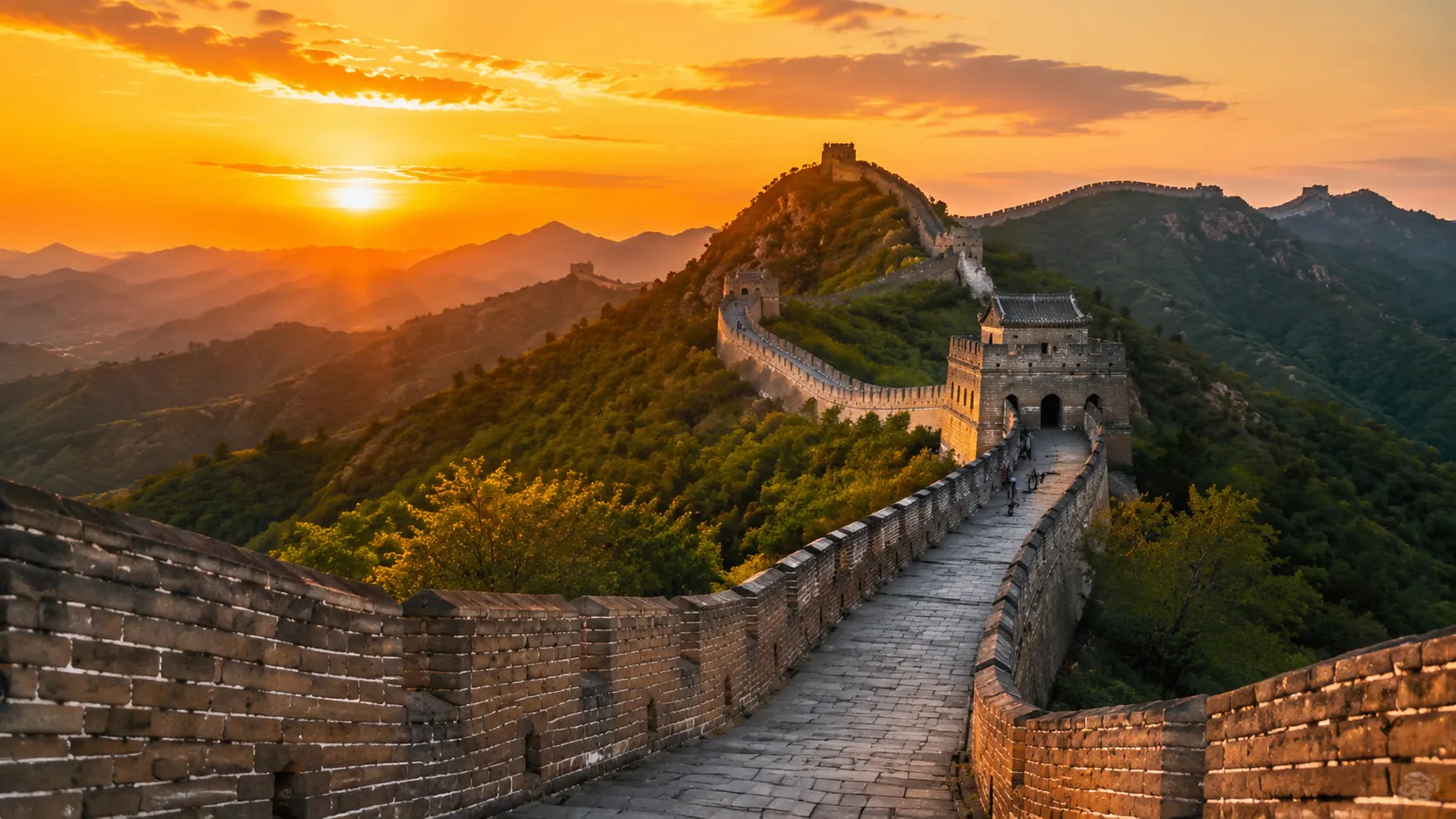
Romantic river cruises, sunset on the Great Wall, candlelit dinners in historic neighborhoods.
Luxury Trips
5-star hotels, private guides, first-class high-speed rail, exclusive dining experiences.
Budget Trips
Smart spending for seeing China on $50–80/day, from hostels to street food and local trains.
First-Time China
Everything for a smooth first trip: visas, payment apps, SIM cards, and culture tips.
Popular Multi-City Routes
Each route gives you a different flavor of China. Follow the dots.
Classic China
The essential first-timer route
Great Wall, Terracotta Warriors, The Bund
China + Pandas
Add Chengdu for the panda experience
Great Wall, Terracotta Warriors, Panda Base
China Nature
Mountains, rivers, and karst peaks
Li River cruise, Avatar mountains, Shanghai skyline
China Highlights
The ultimate comprehensive journey
Great Wall, Warriors, Pandas, The Bund
China + Yunnan
Add southwestern culture and scenery
Lijiang Old Town, Tiger Leaping Gorge, Dali
Best Places to Visit in China: 8 Destinations Compared
Explore each city in depth: major attractions with prices and insider tips, day-by-day itineraries, where to stay, what to eat, best photo spots, shopping, nightlife, and essential safety advice.
Beijing
Shanghai
Xi'an

Chengdu
Zhangjiajie
Guilin & Yangshuo
Yunnan
Guangzhou
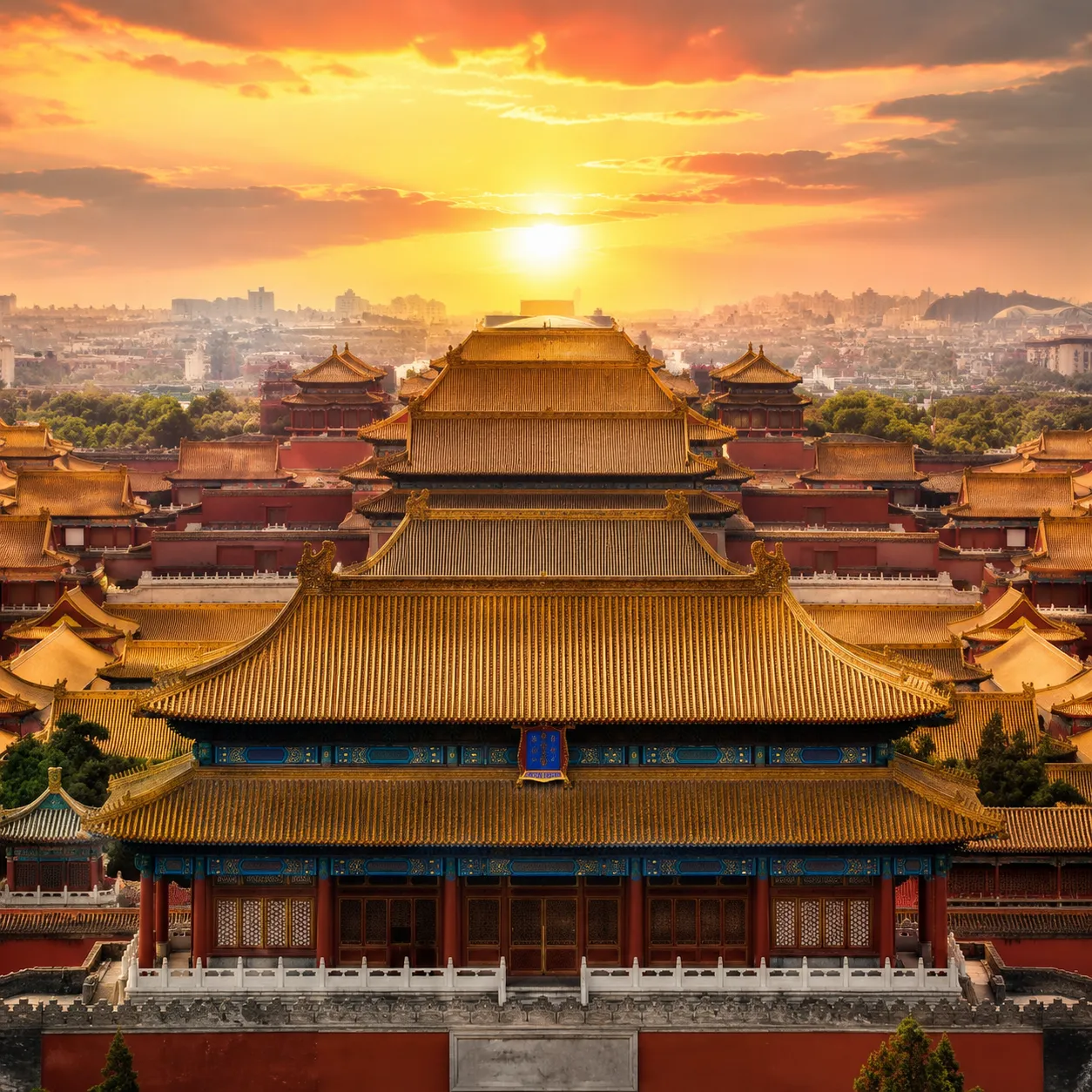
Beijing 北京
Beijing is China's imperial capital and the political and cultural heart of the nation. With over 3,000 years of history, the city layers ancient dynasties alongside cutting-edge modernity. Seven UNESCO World Heritage sites sit within city limits — more than any other city on earth. The Forbidden City alone spans 180 acres with 980 buildings, housing the world's largest collection of preserved ancient wooden structures. Beyond the monuments, Beijing's soul lives in its hutongs — narrow alleyways where families have lived for generations, where you can still find old men playing chess over jasmine tea and the scent of jianbing (savory crepes) drifting from street carts. Beijing is also China's best food city, not for innovation but for authenticity — this is where Peking Duck was perfected, where imperial cuisine meets street food, and where every alley hides a decades-old family recipe.
Where to Stay
Dongcheng District · $15–30/night
Gulou / Nanluoguxiang · $80–150/night
Haidian District · $500+/night
Must-Try Food
Nearby Day Trips
Top Attractions
Forbidden City 故宫
★ Must SeeThe world's largest palace complex, home to 24 emperors across the Ming and Qing dynasties. Built between 1406-1420, it covers 72 hectares with 980 surviving buildings. The scale is staggering — the central axis alone stretches nearly a kilometer from the Meridian Gate to the Imperial Garden. Key halls: Hall of Supreme Harmony (the throne room with its golden dragon ceiling), Palace of Heavenly Purity (emperor's living quarters), and the Treasure Gallery housing imperial jewelry and artifacts. Pro tip: the western and eastern palaces are quieter and more atmospheric than the central axis.
Great Wall at Mutianyu 慕田峪长城
★ Must SeeThe most visitor-friendly Great Wall section near Beijing. Fully restored with smooth stone paths, 23 watchtowers, and stunning mountain scenery. Less crowded than Badaling (the tour-bus section) but equally impressive. The 2.5km restored section winds dramatically along mountain ridges, with dense forest on both sides turning brilliant colors in autumn. The cable car whisks you to Tower 14, from where you can hike west to Tower 23 (the highest point) or east to Tower 6 (where the toboggan slide starts).
Temple of Heaven 天坛
★ Must SeeA masterpiece of Ming dynasty architecture where emperors performed annual ceremonies to pray for good harvests. The Hall of Prayer for Good Harvests — a triple-tiered circular wooden structure built entirely without nails — is one of the most photographed buildings in China. The surrounding 267-hectare park is a living museum of Beijing life: at dawn, locals gather to practice tai chi, sword dancing, water calligraphy on the stone paths, and group singing. It's as much a cultural experience as an architectural one.
Summer Palace 颐和园
★ Must SeeThe largest and best-preserved imperial garden in China, and a UNESCO World Heritage site. Built as a royal summer retreat, it centers on Kunming Lake (man-made, dug by 10,000 laborers) and Longevity Hill, crowned by the Tower of Buddhist Incense with panoramic views. The Long Corridor — a 728-meter covered walkway decorated with over 14,000 paintings of Chinese mythology and landscapes — holds a Guinness World Record. Rent a paddle boat on the lake or hike the hill paths for quieter corners.
Nanluoguxiang & Hutongs 南锣鼓巷
Beijing's most famous hutong (alleyway) neighborhood, dating to the Yuan dynasty (13th century). The main 800-meter lane is lined with courtyard cafés, craft shops, and snack stalls — touristy but lively. The magic is in the side alleys (east and west off the main lane) where real Beijingers still live in traditional courtyard homes (siheyuan). You'll see residents playing mahjong, tending rooftop gardens, and walking tiny dogs. Nearby, the Drum and Bell Towers mark the historic center of the old city, and Houhai Lake offers lakeside bars and boat rides.
City Budget (Per Person / Day)
Getting There & Around
Capital Airport (PEK): Airport Express ¥25 (20 min). Daxing (PKX): Express ¥35 (30 min). Taxi ~¥120 to city. Metro ¥3–9, covers all sites.
Safety Tips
Beijing is extremely safe for tourists — violent crime is virtually nonexistent. The main risks are petty: pickpocketing in crowded tourist areas (Forbidden City, Wangfujing) and taxi scams at the airport (always use the official taxi queue or Didi). Watch for the 'tea house scam' where friendly English-speaking strangers invite you to a traditional tea ceremony that ends with an extortionate bill. Air quality can be poor November–March: check the AQI and bring N95 masks if needed. Tap water is not drinkable — use bottled water for everything including brushing teeth.
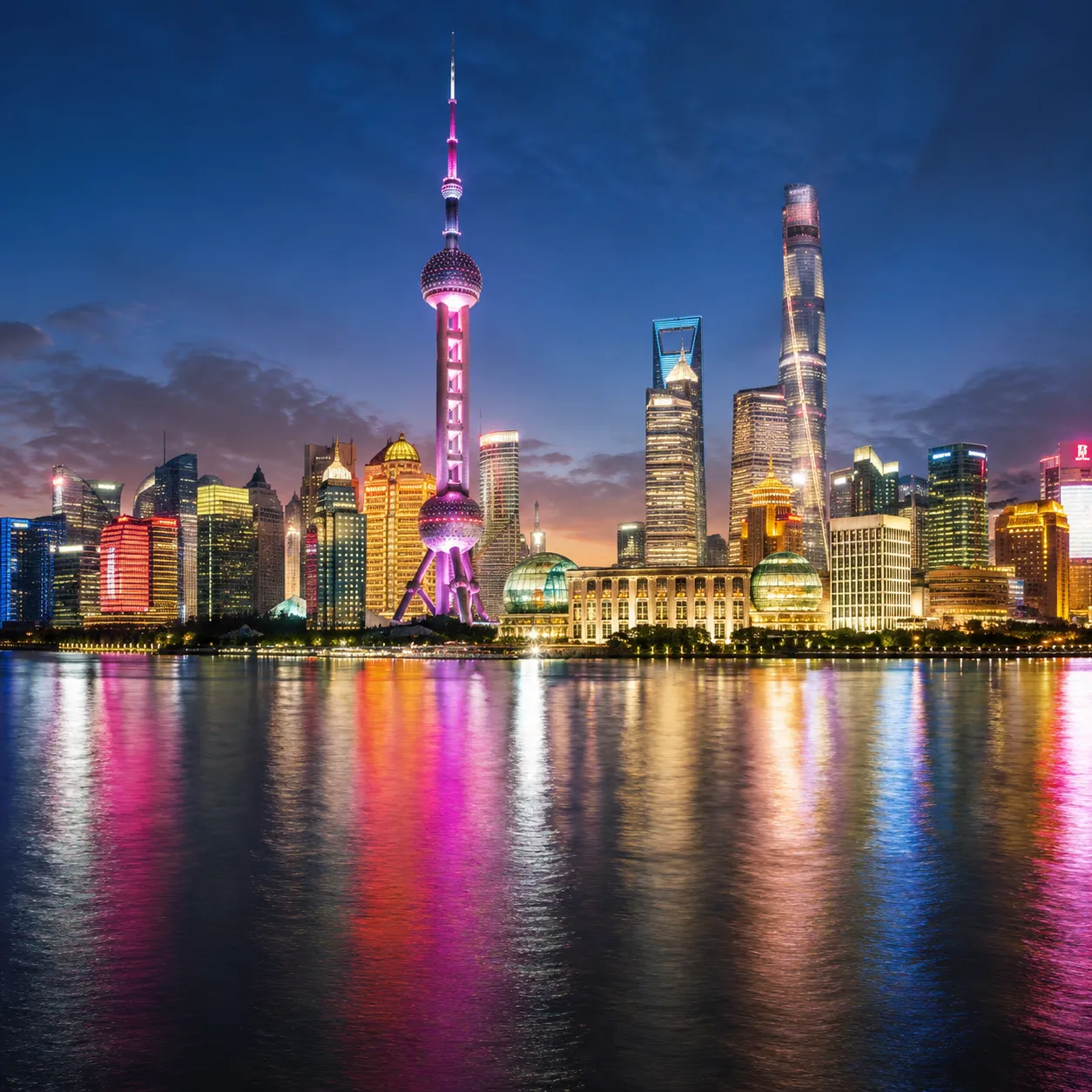
Shanghai 上海
Shanghai is China's future and its past colliding in real time. On one side of the Huangpu River, the Bund's 1920s Art Deco landmarks tell the story of old Shanghai — the 'Paris of the East' where European powers carved out concessions and built one of the world's great trading ports. On the other side, Pudong's sci-fi skyline — anchored by the Shanghai Tower, the world's third-tallest building at 632 meters — represents China's ambition in glass and steel. Between these poles, Shanghai offers tree-lined French Concession streets with Europe's best-preserved Art Deco residential architecture outside of Paris, a food scene that ranges from ¥15 soup dumplings to three-Michelin-star tasting menus, and an energy that makes New York feel sleepy. Shanghai is not ancient China — it's China right now, and it's exhilarating.
Where to Stay
Near People's Square · $12–25/night
Jing'an District · $80–150/night
The Bund · $400+/night
Must-Try Food
Nearby Day Trips
Top Attractions
The Bund & Huangpu River 外滩
★ Must SeeA 1.5km waterfront promenade along the Huangpu River, lined with 26 buildings representing every major architectural style from Gothic to Art Deco — the legacy of Shanghai's colonial trading era. By day, it's a riverfront walkway where locals fly kites and practice tai chi. By night, it transforms into one of the world's most spectacular cityscapes as Pudong's skyscrapers light up across the river. The view encompasses the Oriental Pearl Tower, Shanghai Tower, Shanghai World Financial Center (the 'bottle opener'), and Jin Mao Tower — four of the world's tallest buildings in a single frame.
Shanghai Tower 上海中心大厦
★ Must SeeThe world's third-tallest building (632m, 128 floors) and China's tallest. The observation deck on the 118th-119th floors offers 360-degree views from 546 meters — on clear days, you can see the Yangtze River delta. The elevator is the world's fastest at 20.5 m/s, reaching the top in 55 seconds. The building itself is a twisting glass spiral designed to reduce wind loads by 24% — a feat of engineering as impressive as the view.
Yu Garden & Old City 豫园
★ Must SeeA 400-year-old classical Chinese garden in the heart of Shanghai's old city, built by a Ming dynasty official for his parents. Its 2 hectares are a masterclass in Chinese garden design: rockeries meant to evoke mountain ranges, carp-filled ponds, zigzag bridges (to confuse evil spirits, which can only travel in straight lines), and the iconic Mid-Lake Pavilion teahouse. The surrounding Yuyuan Bazaar is a restored Ming-Qing style shopping area — touristy but photogenic, especially during lantern festival season.
French Concession 法租界
Shanghai's most charming neighborhood — tree-lined streets, 1920s lane houses, and the best concentration of cafés, boutiques, and restaurants in the city. The area was a French-governed concession from 1849 to 1943, and the European architectural legacy remains beautifully preserved. Key streets: Wukang Road (historic mansions including the Normandie Apartments), Fuxing Road (cycling under plane trees), and Anfu Road (designer boutiques and third-wave coffee). Fuxing Park fills with locals doing morning tai chi, ballroom dancing, and calligraphy.
City Budget (Per Person / Day)
Getting There & Around
Pudong (PVG): Maglev ¥50 (8 min) then metro. Hongqiao (SHA): Metro Line 2 direct (¥5). Metro ¥3–9, 19 lines. Taxi: ¥14 flagfall.
Safety Tips
Shanghai is extremely safe. Pickpocketing is the main concern on Nanjing Road East and around Yu Garden. Taxis are reliable and metered but drivers rarely speak English — have your destination written in Chinese. The metro system is modern, clean, and has English signage throughout. Avoid unlicensed taxis at the airport and train stations. Tap water is not drinkable. Summers (July-August) are oppressively hot and humid — carry water and plan indoor activities during midday.
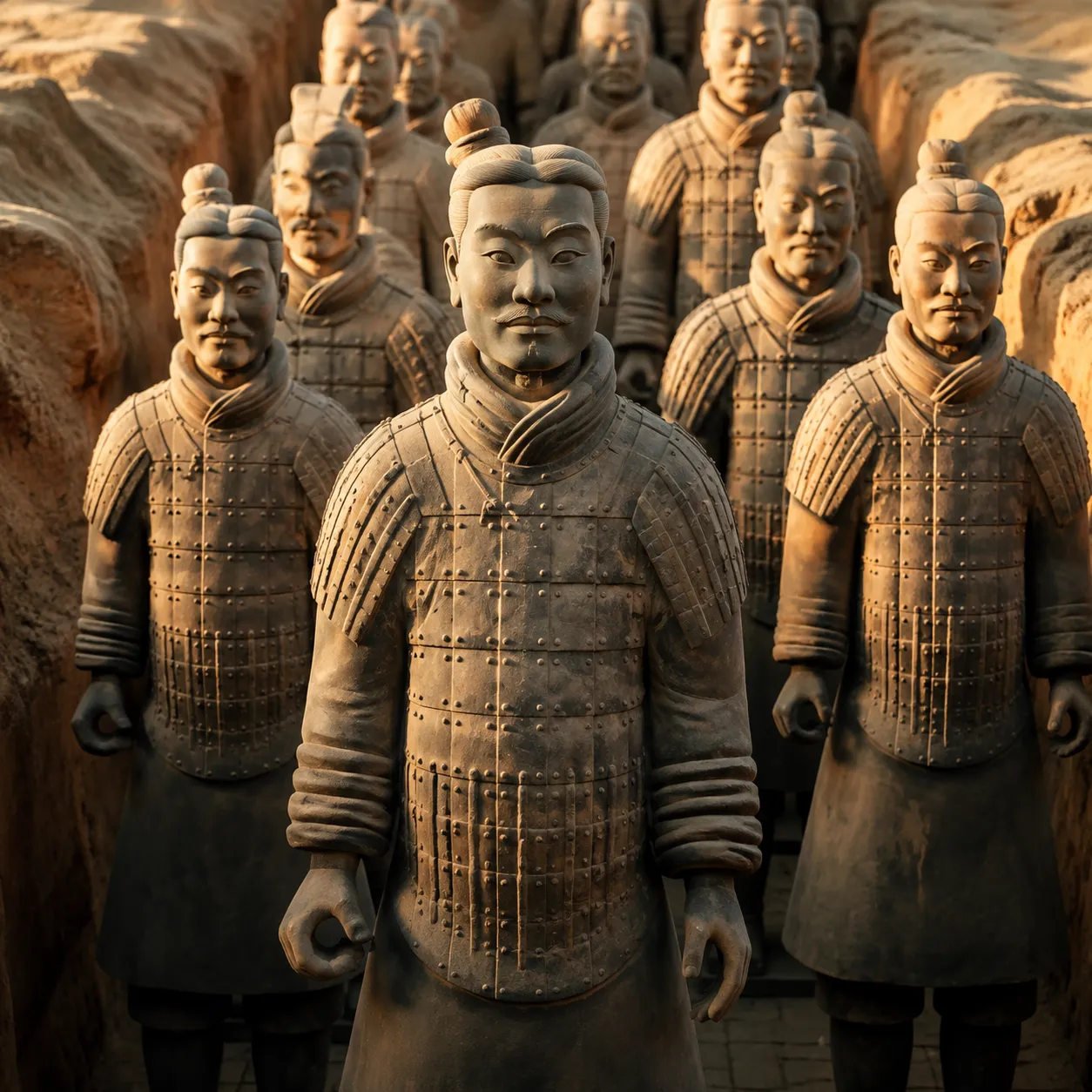
Xi'an 西安
Xi'an is where Chinese civilization begins. As the capital of 13 dynasties spanning over 1,100 years, it was the eastern terminus of the Silk Road and — at its Tang dynasty peak — the largest and most cosmopolitan city in the world, with over a million residents from across Asia, the Middle East, and beyond. Today, Xi'an is famous for one thing above all: the Terracotta Warriors, an army of 8,000 life-sized clay soldiers buried with China's first emperor in 210 BCE. But Xi'an is far more than its greatest archaeological discovery. The 14km Ming dynasty city wall — the most complete ancient city wall in China — encircles a vibrant old city where the Muslim Quarter's food stalls serve lamb skewers and hand-pulled noodles under red lanterns, and where you can bicycle atop fortifications built 600 years ago while looking down at everyday life unfolding below.
Where to Stay
Near South Gate (Nanmen) · $10–20/night
Inside City Wall · $50–100/night
Near Giant Wild Goose Pagoda · $100–200/night
Must-Try Food
Nearby Day Trips
Top Attractions
Terracotta Warriors Museum 兵马俑
★ Must SeeOne of the world's greatest archaeological discoveries, found by farmers digging a well in 1974. The army was created around 210 BCE to guard Qin Shi Huang — China's first emperor — in the afterlife. Pit 1 (the largest) contains over 6,000 warriors and horses in battle formation, each with unique facial features and hairstyles indicating their rank. The scale is overwhelming: row after row of warriors stretching into the distance. Pit 2 contains cavalry and archers, while Pit 3 is the command center. The bronze chariots in the exhibition hall are masterpieces of ancient metallurgy.
Ancient City Wall 城墙
★ Must SeeThe most complete ancient city fortification in China — a 14km rectangular wall averaging 12 meters high and 15 meters wide at the top. Originally built during the Tang dynasty and rebuilt in the Ming dynasty (1370), it encircles the old city center. The top is wide enough for a dedicated bike path — cycling the full circuit takes 1.5-2 hours and offers constantly shifting views of old and new Xi'an: temple roofs on one side, modern high-rises on the other.
Muslim Quarter 回民街
★ Must SeeXi'an's culinary heart and the legacy of its Silk Road history. This neighborhood behind the Drum Tower has been home to Xi'an's Hui Muslim community for over 1,300 years, since Arab and Persian traders settled here during the Tang dynasty. The main street is a sensory overload of food stalls, spice shops, and butcher shops displaying hanging lamb carcasses — but the real treasures are on the side alleys where local families run tiny eateries unchanged for generations.
City Budget (Per Person / Day)
Getting There & Around
Xi'an Airport (XIY): Shuttle bus ¥25 (1h) or metro Line 14. High-speed rail to Beijing (4.5h), Chengdu (3h). Metro ¥2–8. Taxi ¥9 flagfall.
Safety Tips
Xi'an is very safe. Watch for pickpockets in the crowded Muslim Quarter and at the Terracotta Warriors (especially in Pit 1). The 'art student scam' — where friendly English speakers invite you to see their 'art exhibition' that turns into a high-pressure tea or painting sale — is common near the Drum Tower and South Gate. Taxis are plentiful but drivers rarely speak English. Didi is reliable and removes the language barrier. Air quality can be poor in winter.
Chengdu 成都
Chengdu might be China's most livable big city. The capital of Sichuan province operates on a different rhythm than Beijing or Shanghai — slower, more indulgent, and unapologetically pleasure-seeking. This is where you spend mornings watching giant pandas munch bamboo, afternoons in a bamboo-chair tea house by the river having your ear professionally cleaned (a local tradition), and evenings gathered around a bubbling Sichuan hot pot that will reset your understanding of what 'spicy' means. Chengdu's food culture is UNESCO-recognized as a City of Gastronomy, and the local philosophy of life — 'the best revenge is a life well-lived' — permeates everything from the 24-hour hot pot joints to the mahjong games spilling onto sidewalks.
Where to Stay
Near Kuanzhai Alley · $8–15/night
Taikoo Li · $120–200/night
IFS / Chunxi Road · $200–350/night
Must-Try Food
Nearby Day Trips
Top Attractions
Chengdu Research Base of Giant Panda Breeding 大熊猫繁育研究基地
★ Must SeeThe world's premier panda conservation and breeding center, home to over 200 giant pandas living in a beautifully landscaped 100-hectare reserve that mimics their natural habitat. The highlight: the nursery and kindergarten areas where baby pandas (born July-September) tumble, play, and nurse — genuinely one of the most joyful wildlife experiences on earth. Red pandas, swans, and peacocks roam the grounds. Unlike a zoo, the pandas here have large naturalistic enclosures with bamboo forests, climbing structures, and pools.
Jinli Ancient Street 锦里古街
A restored Qing-dynasty style pedestrian street adjacent to the Wuhou Shrine. At 350 meters long, it packs in traditional Sichuan architecture, red lanterns, teahouses, snack stalls, and craft shops. While thoroughly tourist-oriented, Jinli is genuinely charming — especially at night when the lanterns glow and the crowds thin out. It's adjacent to the Wuhou Shrine (dedicated to the Three Kingdoms-era strategist Zhuge Liang), which is worth visiting first for historical context.
People's Park & Tea Houses 人民公园
The living room of Chengdu. This is where you understand the city's famous 'slow life' philosophy. Heming Tea House, inside the park, has been serving tea since the 1920s under bamboo groves — order a cup of jasmine tea (¥15-30), and you can sit for hours while locals play mahjong, read newspapers, and have their ears cleaned by professional ear-pickers wielding an array of tiny metal tools. The park also has a bizarrely popular 'marriage market' on weekends where parents post their adult children's resumes on umbrellas and trees in hopes of finding them a spouse.
City Budget (Per Person / Day)
Getting There & Around
Tianfu (TFU): Metro Line 18 (¥10, 50 min). Shuangliu (CTU): Metro Line 10 (¥5). Metro ¥2–10. High-speed rail to Xi'an (3h), Chongqing (1.5h).
Safety Tips
Chengdu is very safe. The biggest risk is overestimating your spice tolerance — Sichuan peppercorns produce a numbing sensation (ma) that's different from capsaicin heat (la) and can be overwhelming. Start with mild spice levels and work up. Be aware of the 'tea ceremony scam' near tourist areas where friendly strangers invite you to a tea experience that ends with an inflated bill. Tap water is not drinkable. Summers are hot and humid; the city is in a basin that traps moisture and pollution. Winters are mild but overcast — Chengdu is one of China's cloudiest cities.
Zhangjiajie 张家界
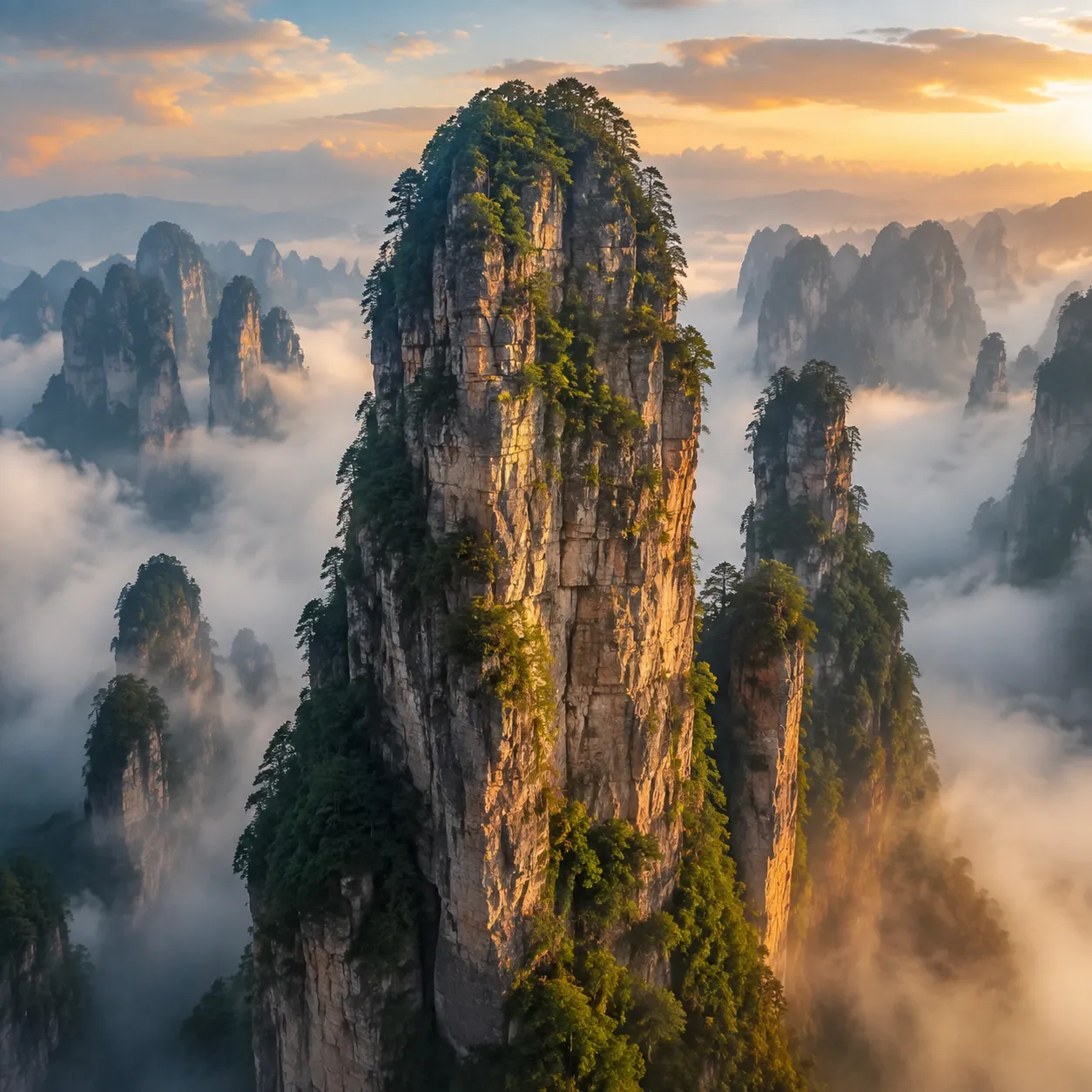
Zhangjiajie is China's most surreal landscape — a forest of 3,000 quartz-sandstone pillars rising through mist like the floating mountains in James Cameron's Avatar (which they directly inspired). Located in northwestern Hunan province, this UNESCO Global Geopark is a place where geology has gone gloriously wrong: ancient seabeds were pushed skyward, then carved by millennia of erosion into knife-edge columns draped in pine trees and wreathed in cloud. The park spans 480 hectares within the larger Wulingyuan Scenic Area, which also includes the world's highest outdoor elevator (326m Bailong Elevator built into a cliff face) and the world's longest and highest glass-bottomed bridge (430m across Zhangjiajie Grand Canyon).
Where to Stay
Wulingyuan entrance · $8–15/night
Wulingyuan · $80–130/night
Wulingyuan · $150–250/night
Must-Try Food
Nearby Day Trips
Top Attractions
Zhangjiajie National Forest Park 张家界国家森林公园
★ Must SeeChina's first national forest park and the core of the Wulingyuan UNESCO site. The park contains over 3,000 quartz-sandstone pillars, some reaching 200 meters, connected by a network of paved trails, shuttle buses, and cable cars. Key areas: Yuanjiajie (the 'Avatar Mountains' with the Southern Sky Column — renamed 'Avatar Hallelujah Mountain' after the film), Golden Whip Stream (a 7.5km flat walk along a crystal-clear creek through the canyon floor), and Tianzi Mountain (the highest area with the most dramatic panoramic views).
Zhangjiajie Grand Canyon Glass Bridge 张家界大峡谷玻璃桥
★ Must SeeAt 430 meters long and suspended 300 meters above the canyon floor, this was the world's longest and highest glass-bottomed bridge when it opened in 2016. Walking across the transparent panels feels genuinely disorienting — you can see the canyon floor through your feet. The bridge also features the world's highest bungee jump (260m) for the truly fearless. After crossing, a series of paths, waterfalls, and a boat ride take you through the canyon below.
City Budget (Per Person / Day)
Getting There & Around
Zhangjiajie Airport (DYG): Taxi to Wulingyuan (¥100, 40 min). High-speed rail from Changsha (3h), Chongqing (4h). Park shuttles included in ticket.
Safety Tips
The main risks are physical: steep stairs, slippery paths after rain, and vertigo on glass platforms and cliff walks. Wear proper hiking shoes, not sandals. Stay on marked paths — venturing off can lead to unstable cliff edges. Monkeys in the park are aggressive about food — don't eat openly near them and secure your bags. July-August brings heavy rain and occasional trail closures; April-May and September-October are ideal. Tianmen Mountain's glass cliff walk (separate from the Grand Canyon bridge) can close in high winds.
Guilin & Yangshuo 桂林/阳朔
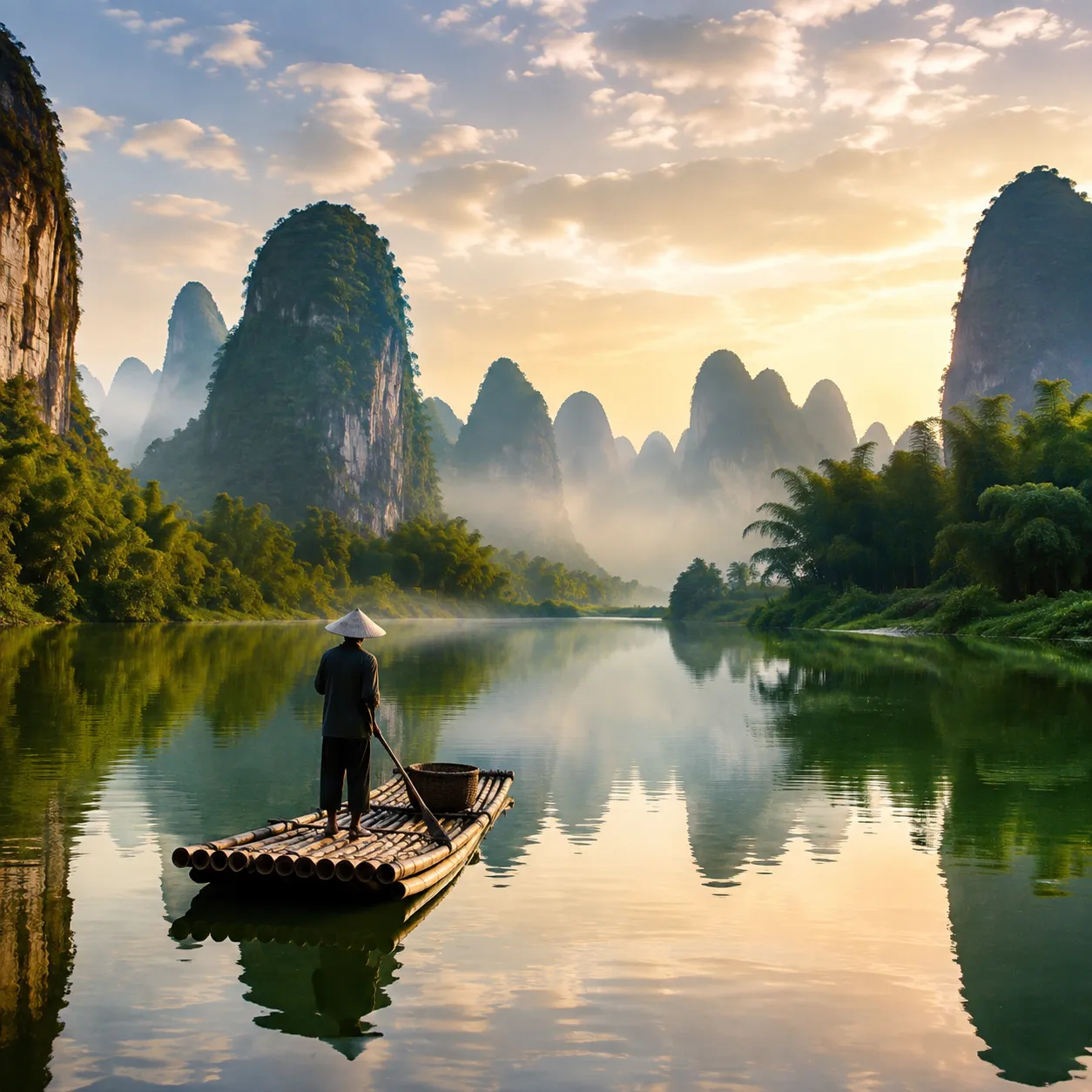
Guilin and Yangshuo deliver the China of imagination: limestone karst peaks rising vertically from emerald rice paddies, water buffalo cooling in rivers, and cormorant fishermen working by lantern light. This landscape — immortalized in classical Chinese painting and poetry for over a thousand years — is the single most photographed scenery in China. The Li River corridor between Guilin and Yangshuo is an 83km gallery of karst formations, each with poetic names like 'Nine Horses Fresco Hill' and 'Yellow Cloth Reflection.' Yangshuo, the small town at the river's end, has evolved from a sleepy backpacker haven into China's outdoor adventure capital — world-class rock climbing on limestone crags, cycling through village lanes, bamboo rafting on the Yulong River, and some of the best-value boutique hotels in Asia.
Where to Stay
West Street area · $8–15/night
Yulong River · $60–120/night
Fuli Town · $300+/night
Must-Try Food
Nearby Day Trips
Top Attractions
Li River Cruise 漓江游船
★ Must SeeThe quintessential China experience. Four hours drifting down the Li River from Guilin to Yangshuo through a landscape that has defined Chinese aesthetics for millennia. The cruise passes bamboo groves, water buffalo, villages clinging to riverbanks, and the iconic karst peaks that appear on the ¥20 Chinese banknote. The scenery is slow and hypnotic — every bend reveals a new composition of peaks, water, and sky.
Yangshuo Countryside & Yulong River 阳朔乡村 & 遇龙河
★ Must SeeYangshuo's countryside is best explored by bicycle or electric scooter. The 'Ten-Mile Gallery' road runs along the Yulong River past karst peaks, organic farms, and villages where life hasn't changed much in decades. The Yulong River bamboo rafts (smaller and more intimate than the Li River boats) take you on a 40-90 minute drift through the most concentrated karst scenery, poled by a boatman in traditional style. Moon Hill — a karst peak with a natural moon-shaped arch carved through it — offers a short but steep 30-minute climb to one of the best viewpoints in the region.
City Budget (Per Person / Day)
Getting There & Around
Guilin Airport (KWL): Shuttle ¥20 (40 min). High-speed rail to Guangzhou (2.5h), Chengdu (5h). Yangshuo is 1.5h by bus from Guilin (¥25).
Safety Tips
The main risks are outdoor activity-related: wear helmets when cycling on main roads (traffic can be chaotic), bring sufficient water for bike trips in summer, and don't swim in the Li River (strong currents in places). Rock climbing should only be done with licensed operators. Bamboo rafts are generally safe but wear the provided life jacket. Mosquitoes can be intense in summer — bring repellent. The summer heat (June-August) is oppressive for outdoor activities; April-May and September-November are ideal.
Yunnan 云南
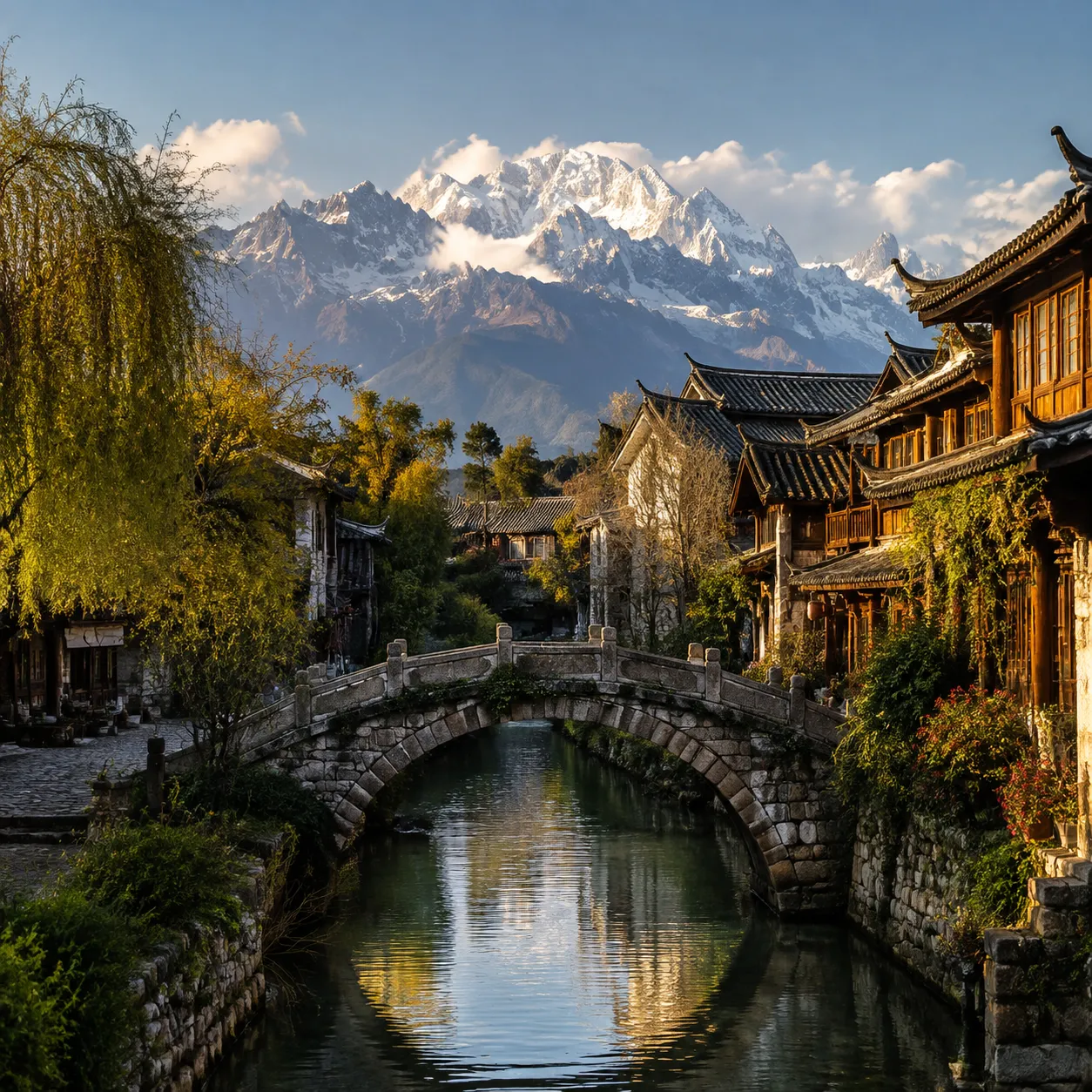
Yunnan is China condensed into one province — snow-capped Tibetan peaks in the north, tropical rainforests on the Myanmar border, and everything in between. This is China's most ethnically diverse province: 25 of China's 55 officially recognized ethnic minorities live here, each with distinct languages, clothing, festivals, and cuisines. The classic Yunnan circuit — Kunming, Dali, Lijiang, Shangri-La — traces the ancient Tea Horse Road, a trading network that predates the Silk Road. Along this route, you'll find Stone Forest's petrified trees turned to karst, Erhai Lake's cycling paths through Bai minority villages, Lijiang's UNESCO-listed maze of cobblestone lanes and wooden bridges, and Tiger Leaping Gorge — one of the deepest river canyons on earth with a legendary 2-day hiking trail.
Where to Stay
Kunming city center · $8–15/night
Lijiang Old Town · $60–120/night
Lijiang Old Town · $500+/night
Must-Try Food
Nearby Day Trips
Top Attractions
Lijiang Old Town 丽江古城
★ Must SeeA UNESCO World Heritage site and one of the best-preserved ancient towns in China. The Naxi minority built this warren of cobblestone streets, wooden buildings, stone bridges, and clear streams fed by melting snow from Jade Dragon Snow Mountain over 800 years ago. The town is crisscrossed by canals — a waterwheel system that has functioned since the Song dynasty — and every corner reveals another courtyard garden or lattice-window facade. At night, red lanterns illuminate the lanes and bars feature live Naxi music (a unique fusion of Taoist ritual music with folk traditions).
Tiger Leaping Gorge 虎跳峡
★ Must SeeOne of the deepest river gorges in the world — the Jinsha River (upper Yangtze) squeezes between Jade Dragon Snow Mountain (5,596m) and Haba Snow Mountain (5,396m), carving a canyon that plunges 3,790 meters from peak to river. The 2-day hiking trail along the gorge's upper rim is one of the world's classic treks: well-marked, moderately challenging, and consistently jaw-dropping as the snow peaks reveal themselves through the clouds. Guesthouses along the trail (Naxi Guesthouse, Halfway Guesthouse, Tina's) offer simple rooms and hot meals with views that would cost $500/night anywhere else.
City Budget (Per Person / Day)
Getting There & Around
Kunming Airport (KMG): Metro Line 6 (¥5, 30 min). High-speed rail: Kunming → Dali (2h) → Lijiang (1.5h). Bus Lijiang → Shangri-La (4h).
Safety Tips
Altitude is the main concern — Lijiang is at 2,400m and Shangri-La at 3,200m. Spend a day acclimatizing in Lijiang before heading higher. Tiger Leaping Gorge hiking requires reasonable fitness; the trail is safe but has unfenced drop-offs. In Tibetan areas, respect local customs: walk clockwise around temples and stupas, don't touch anyone's head, and ask before photographing monks. The mountain roads in Yunnan are winding — take motion sickness medication for bus rides. Tap water is not drinkable anywhere in the province.
Guangzhou 广州
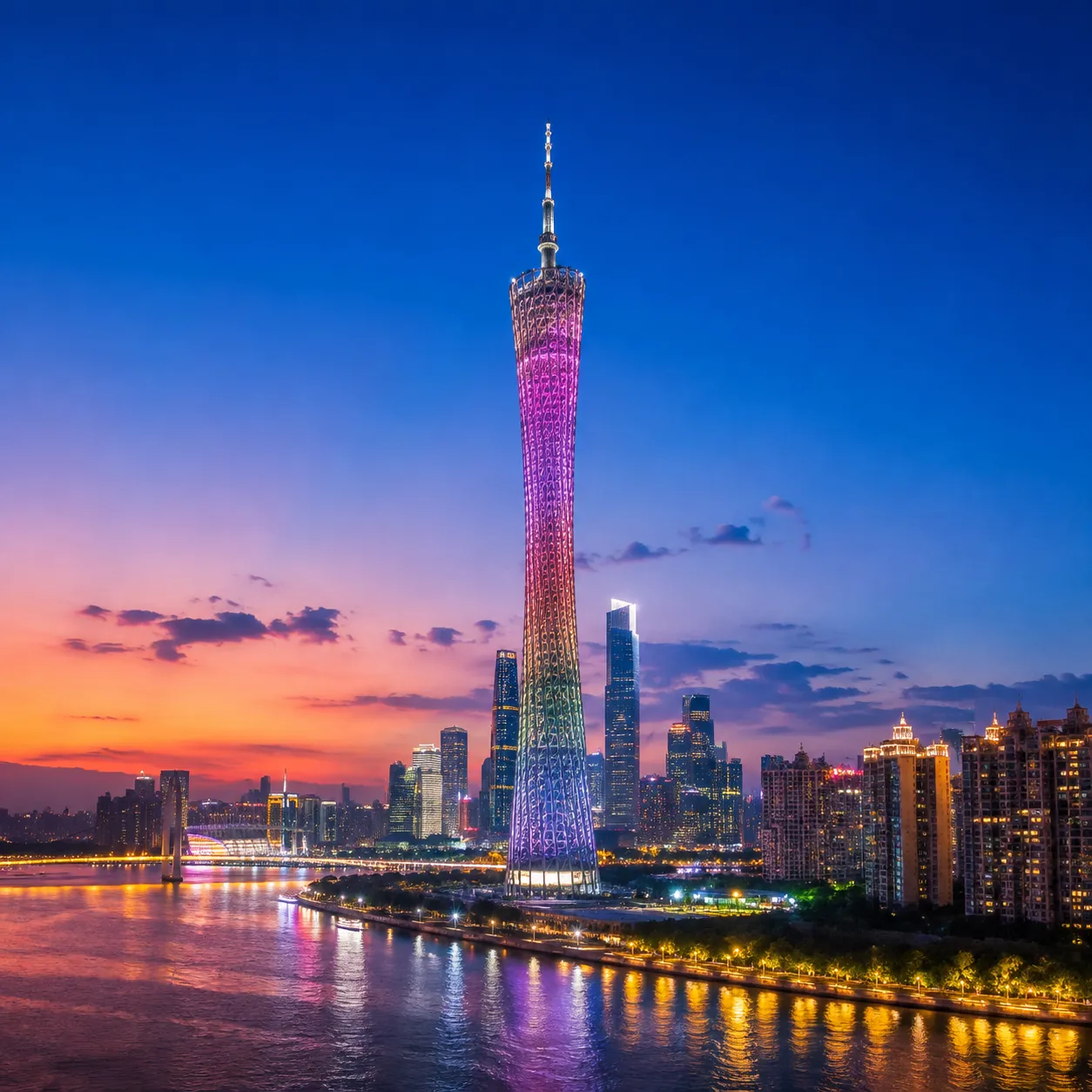
Guangzhou is China's greatest food city — a claim Cantonese people make without hesitation and with good reason. As the capital of Guangdong province and the historic heart of Cantonese culture, Guangzhou has been a trading port for over 2,000 years and the starting point of the Maritime Silk Road. This mercantile history created a cuisine obsessed with freshness, technique, and the natural flavor of ingredients — dim sum, roasted meats, and seafood are elevated to art forms here. Beyond food, Guangzhou offers a fascinating contrast: the gleaming Canton Tower and Zhujiang New Town skyline on one side, and the narrow lanes of the old Liwan district where traditional herbal medicine shops, mahjong parlors, and family-run wonton noodle stalls have operated for generations on the other.
Where to Stay
Yuexiu / Beijing Road · $10–18/night
Haizhu / Pearl River · $80–150/night
Zhujiang New Town · $250–400/night
Must-Try Food
Nearby Day Trips
Top Attractions
Chen Clan Academy 陈家祠
★ Must SeeA stunning complex built in 1894 as both a family temple and an academy for Chen clan members preparing for imperial examinations. Now a folk art museum, every surface — roofs, beams, walls, screens — is covered in exquisite examples of traditional Cantonese craftsmanship: ceramic ridgepole figurines depicting historical dramas, intricate wood carvings, stone sculptures, and ironwork. The level of decorative detail is staggering and provides a crash course in Guangdong's artistic heritage in one building.
Canton Tower & Zhujiang New Town 广州塔 & 珠江新城
★ Must SeeCanton Tower (600m) was the world's tallest tower when completed in 2010 — a twisting hyperboloid structure nicknamed 'Slim Waist' by locals. The observation deck at 488 meters offers panoramic views across the Pearl River Delta. Across the river, Zhujiang New Town is Guangzhou's CBD: the Guangdong Museum (a striking black-and-red puzzle-box building by Rocco Design, free entry), the Guangzhou Opera House (Zaha Hadid's fluid twin-boulder design, one of her masterpieces), and the IFC tower. The area around Huacheng Square is particularly impressive at night when the towers put on coordinated LED light shows.
City Budget (Per Person / Day)
Getting There & Around
Baiyun Airport (CAN): Metro Line 3 to city (¥8, 45 min). High-speed rail to Shenzhen (30 min), Hong Kong (1h), Guilin (2.5h). Metro ¥2–12, 16 lines.
Safety Tips
Guangzhou is very safe. The main annoyance is aggressive touts at the train station and around the wholesale markets. Watch your belongings in crowded shopping districts. Summers (May-September) are oppressively hot and humid with frequent thunderstorms — carry an umbrella at all times. Typhoon season runs August-October, though direct hits on Guangzhou are rare. Tap water is not drinkable. English is less widely spoken than in Beijing or Shanghai — have your destinations written in Chinese characters.
How to Find the Right Hotel in China
From hostels to five-star heritage properties, here is what to expect at each budget level and how to book.
Budget
Clean hostels and guesthouses near major sights. English-speaking staff, communal areas.
Solo travelers, backpackers, students
Mid-range
Comfortable 3-4 star hotels or boutique guesthouses. Western amenities, metro access, breakfast included.
Couples, families, first-time visitors
Luxury
5-star international chains and heritage properties like converted hutong courtyard homes in Beijing.
Honeymooners, special occasions, comfort seekers
Pro tip: For each city guide in the Destinations section above, we list specific recommended hotels at each budget level. Scroll up and click through each city tab to find where to stay in Beijing, Shanghai, Xi'an, Chengdu, Zhangjiajie, Guilin/Yangshuo, Yunnan, and Guangzhou.
Important for foreign visitors: China only allows hotels with a foreign-stay license (涉外酒店) to host international guests. All international chains and every property we recommend hold this license, but double-check before booking in smaller towns or family-run guesthouses — some homestays cannot legally check you in.
Which City Is Right for You?
Can't decide between two cities? Here is what makes each one unique.
Beijing vs Shanghai
Ancient capital, Great Wall, hutongs, imperial history. Slower pace, colder winters. Best for first-timers who love history.
Futuristic skyline, Art Deco streets, world-class dining. Fast-paced, cosmopolitan. Best for city lovers and foodies.
Verdict: Do both. Beijing is the historical heart; Shanghai is China's future. They complement, not compete.
Guilin vs Zhangjiajie
Gentle karst peaks, Li River cruise, cycling through rice paddies. Relaxed, photogenic, great for couples.
Towering sandstone pillars, glass bridges, world's highest elevator. Dramatic, adventurous, Avatar-like scenery.
Verdict: Guilin for relaxation and romance. Zhangjiajie for adrenaline and jaw-drop moments.
Chengdu vs Xi'an
Pandas, fiery Sichuan food, tea house culture, laid-back lifestyle. Gateway to Tibet and Yunnan.
Terracotta Warriors, ancient city wall biking, Muslim Quarter street food. The starting point of the Silk Road.
Verdict: Chengdu for food and pandas. Xi'an for ancient history. Both are essential if you have 10+ days.
Yunnan vs Tibet
Diverse landscapes, 25 ethnic minorities, Tiger Leaping Gorge, ancient towns. No special permit needed.
Potala Palace, Mount Everest Base Camp, high-altitude monasteries. Requires special permit and guided tour.
Verdict: Yunnan for independent travelers. Tibet for the truly adventurous with more planning and budget.
How Much Does a Trip to China Cost Per Day in 2026?
Realistic budget estimates based on travel style, with a detailed breakdown.
Estimates from our independent research, August 2026 (USD). Prices vary by season, city, and booking platform. Excludes international flights.
| Travel Style | Per Day (USD) |
|---|---|
| Budget | $50-100 |
| Mid-range | $100-200 |
| Luxury | $250+ |
* Includes accommodation, food, transport, and activities. Excludes international flights.
Example Trip Totals (mid-range, 14 days)
- Couple (2 adults): approx. $2,800–5,600 total — 2 people × 14 days × $100–200/day
- Family of 4 (2 adults + 2 kids): approx. $4,200–8,400 total — kids pay 30–50% less for attraction tickets and usually share rooms
- Solo traveler: approx. $1,400–2,800 total — single occupancy raises the per-person cost
Children under 6 often enter attractions free; ages 6–18 typically pay half price. Excludes international flights.
Quick Cost Calculator
Do You Need a Visa for China? 240-Hour Transit & L Visa Rules
China visa rules are changing fast. Here is what you need to know.
Sources: China National Immigration Administration (en.nia.gov.cn) and Chinese embassies/consulates. Rules verified August 2026 — policies change frequently, always confirm with your local Chinese embassy before booking.
240-Hour Transit-Free Ports
Policy covers 24 provinces with 60+ designated ports. Must hold a confirmed onward ticket to a third country/region. Travel within the 24 covered provinces is allowed.
How to Apply for a China Tourist Visa (L Visa)
- 1Check if you need a visaMany nationalities need an L visa. Check your local Chinese embassy website for the latest rules — visa policies change frequently. Currently, 55 countries have 240-hour (10-day) transit-free access, and citizens of 40+ countries enjoy 30-day visa-free entry.
- 2Gather required documentsValid passport (6+ months validity, 2+ blank pages). Completed visa application form (COVA, filled online). Recent passport photo (48mm x 33mm, white background). Round-trip flight itinerary + hotel bookings. Detailed travel itinerary. Bank statements (last 3 months) showing sufficient funds.
- 3Submit your applicationMost countries: submit in person at the nearest Chinese embassy/consulate or visa application center (CVASC). Some countries allow postal applications. No appointment system in most locations — arrive early (before 9am) to avoid long queues. Biometric data (fingerprints) collected on site.
- 4Pay and waitStandard L visa fee: approximately $140 (varies by nationality and reciprocity). Processing time: 4-10 business days (standard), 2-3 business days (express, extra fee). Single-entry 30-day tourist visa is the most common for first-time visitors. 10-year multiple-entry visas available for US citizens ($140).
Common Rejection Reasons & Pro Tips
- ✗Incomplete itinerary: You must provide hotel bookings for every night. Book refundable hotels if your plans are flexible.
- ✗Passport validity: Less than 6 months remaining and/or fewer than 2 blank pages = automatic rejection.
- ✗Tibet/Xinjiang: Listing these regions on your itinerary triggers extra scrutiny. Apply for a standard itinerary first, then arrange permits separately after visa approval.
- ✓Pro tip: Apply 4-6 weeks before departure. Avoid applying during Chinese national holidays when embassies operate with reduced staff. Keep a photocopy of your passport and visa separate from the originals during your trip.
Frequently Asked Questions
How many days do I need for a China trip?+
For a first trip, 10–14 days is ideal. This lets you cover 3–4 cities at a comfortable pace. A 7-day trip works for a quick Beijing-only visit. For a comprehensive experience across 5+ cities, plan 21 days.
What is the best China itinerary for first-time visitors?+
The classic Golden Triangle — Beijing (Great Wall, Forbidden City), Xi'an (Terracotta Warriors), Shanghai (modern skyline, Disney) — is perfect for first-timers. It offers history, culture, and modern China in one trip.
Is China safe for tourists?+
China is one of the safest countries for travelers. Violent crime against tourists is extremely rare. Major cities are well-lit at night with heavy police presence. Common precautions like watching your belongings in crowded areas are sufficient.
How much does a trip to China cost?+
Budget travelers can manage $50–100/day (hostels, local food, public transport). Mid-range travelers spend $100–200/day (3-4 star hotels, nice restaurants, Didi). Luxury travel runs $250+/day (5-star hotels, private guides, fine dining).
Do I need a visa to visit China?+
Most nationalities require a tourist visa (L visa) before arrival. However, China has greatly expanded visa-free access — travelers from 55 countries can stay up to 240 hours (10 days) when transiting, and citizens of 40+ countries can enter visa-free for up to 30 days. Check the official China travel portal for your country's requirements.
Can I use Alipay or WeChat Pay as a foreigner?+
Yes! Both Alipay and WeChat Pay now support foreign credit cards. Download the app, verify your passport, and link your Visa/Mastercard before your trip. Cash is rarely used in China — mobile payment is essential.
Can I use credit cards in China?+
International credit cards work at major hotels, upscale restaurants, and large shopping malls. However, many smaller shops, street vendors, and local restaurants only accept Alipay or WeChat Pay. Set up at least one mobile payment app before traveling.
Is China easy to travel around?+
China has the world's largest high-speed rail network, connecting all major cities efficiently. Trains run on time, stations are well-organized, and English signage is common in major hubs. Domestic flights connect farther destinations. Traveling between cities is easier than most first-timers expect.
What is the best time to visit China?+
Spring (April–May) and autumn (September–October) offer the best weather — mild temperatures, less rain, and clear skies. Avoid Chinese New Year (late January/February) when transport is chaotic, and summer (June–August) which is hot and crowded.
Can I travel independently in China?+
Absolutely. Independent travel in China is easier than ever with translation apps, English-friendly booking platforms (Trip.com), and universal mobile payment. You don't need a tour group unless you prefer the convenience.
What is China's 240-hour visa-free transit?+
Travelers from 55 countries can stay in China for up to 240 hours (10 days) without a visa when transiting through one of 60+ designated ports, as long as you hold an onward ticket to a third country. You must stay within the permitted region and cannot extend the stay. It is not the same as the 30-day unilateral visa-free entry, which has no third-country requirement.
Can I enter China without a visa in 2026?+
Yes, if you qualify for one of three routes: the 240-hour transit exemption, unilateral visa-free entry (currently 40+ countries, up to 30 days), or a standard tourist L visa applied for in advance. Check your nationality against the official China National Immigration Administration list before booking — the rules changed several times during 2025–2026.
Do I need a VPN in China?+
Yes, if you want to use Google, Gmail, WhatsApp, Instagram or most Western apps. Install and test your VPN before you land — the Apple App Store and Google Play are not reliably accessible from inside China. A travel eSIM or international roaming plan often routes traffic outside the mainland and works without a separate VPN.
What is a good 7-day China itinerary?+
With 7 days, pick one region and go deep rather than three cities shallow. The most reliable option is Beijing (4 days: Great Wall, Forbidden City, hutongs, Temple of Heaven) plus Xi'an (3 days: Terracotta Warriors, city wall, Muslim Quarter), linked by a 4.5-hour high-speed train. Adding Shanghai turns it into a 10-day trip.
Is 10 days enough for China?+
Ten days comfortably covers the classic Golden Triangle: Beijing (4 days), Xi'an (2 days) and Shanghai (3–4 days), with one travel day. That pace gives you imperial history, the Terracotta Warriors and modern China without spending most of the trip on trains. First-time visitors rarely regret choosing 10 days over a rushed 7.
When Is the Best Time to Visit China? Month-by-Month Guide
Month-by-month weather comparison across four key cities. Spring and autumn are ideal.
Based on long-term climate averages (1991–2020) from the China Meteorological Administration; conditions vary year to year. Temperatures shown as daily low/high.
Show the full month-by-month weather table (12 months x 4 cities) ▾
| Month | Beijing | Shanghai | Chengdu | Guilin |
|---|---|---|---|---|
| Jan | −9/2°C · Dry | 1/8°C · Damp | 3/9°C · Overcast | 5/11°C · Cool |
| Feb | −6/5°C · Dry | 2/10°C · Damp | 5/12°C · Cloudy | 7/13°C · Cool |
| Mar | 0/12°C · Dusty | 6/15°C · Mild rain | 9/17°C · Mild | 11/17°C · Rainy |
| Apr | 8/21°C · Perfect | 11/21°C · Pleasant | 14/23°C · Best | 16/23°C · Humid |
| May | 14/27°C · Warm | 16/26°C · Warm | 19/28°C · Warm | 20/28°C · Rainy |
| Jun | 19/31°C · Hot | 21/29°C · Plum rain | 22/30°C · Rainy | 23/31°C · Wet |
| Jul | 22/32°C · Humid | 25/33°C · Hot | 24/31°C · Humid | 25/33°C · Hot/wet |
| Aug | 21/31°C · Humid | 25/33°C · Typhoon | 23/31°C · Humid | 25/33°C · Hot/wet |
| Sep | 15/26°C · Perfect | 21/29°C · Best | 20/27°C · Best | 22/30°C · Good |
| Oct | 7/20°C · Best | 15/24°C · Perfect | 15/22°C · Comfort | 17/26°C · Best |
| Nov | 0/10°C · Chilly | 9/18°C · Cool | 10/16°C · Cool | 11/20°C · Mild |
| Dec | −6/3°C · Cold | 3/11°C · Cold | 5/11°C · Cool | 7/15°C · Cool |
| Month | Best Destination Picks | Why |
|---|---|---|
| Jan | Beijing, Harbin | Ice Festival in Harbin; Beijing palaces quiet and half-price hotels |
| Feb | Beijing, Harbin | Lunar New Year atmosphere; festive, but book transport early |
| Mar | Beijing, Xi'an, Guilin | Mild spring, fewer crowds; blossom season begins |
| Apr | Beijing, Xi'an, Shanghai | Prime weather for classic cities; avoid Qingming holiday crowds |
| May | Guilin, Chengdu, Shanghai | Warm and green; avoid May 1st Golden Week crowds |
| Jun | Zhangjiajie, Yunnan | Green mountains at their best; south coast enters rainy season |
| Jul | Yunnan, Zhangjiajie | Cool highland escapes while Beijing/Shanghai bake; light crowds |
| Aug | Yunnan, Zhangjiajie | Same cool picks; avoid southern typhoon and peak heat weeks |
| Sep | Beijing, Xi'an, Shanghai | Autumn begins; clear skies, perfect hiking weather |
| Oct | Guilin, Chengdu, Shanghai | Arguably the best weather of the year; avoid Oct 1st National Week |
| Nov | Guilin, Guangzhou | Mild south, fewer tourists, autumn foliage lingers |
| Dec | Beijing, Harbin | Minimal crowds and discounted hotels; Harbin Ice Festival opens |
Picks cover our 8 guide cities plus Harbin (winter festivals). Peak Chinese holidays (May 1st week, Oct 1st week, Lunar New Year) can push hotel and flight prices 50–100% higher — plan around them.
How to Beat the Crowds in 2026
Peak Chinese holidays can push hotel and flight prices 50–100% higher and triple wait times at major sights. Mark these dates and plan around them:
- Qingming Festival (Tomb-Sweeping): April 4–6, 2026 — classic-city crowds build from April 3.
- Labor Day Golden Week: May 1–5, 2026 — the busiest domestic travel window of the year.
- National Day Golden Week: October 1–7, 2026 — trains and flights sell out weeks ahead; avoid entirely if your dates are flexible.
Five Smarter Ways to Sightsee
- Pick the right section, not just the attraction. Great Wall: Jinshanling or Jiankou instead of Badaling. Terracotta Warriors: start at Pit 3 (the quietest) and finish at Pit 1. Forbidden City: walk the side halls first and leave the central axis for later.
- Go early or late. Hotspots peak between 10am and 3pm. Arrive at 6–8am, or after 4pm when tour groups leave — cooler in summer and better light for photos.
- Swap famous spots for meaningful alternatives. Xi'an: Lintong Museum (first restored warriors) instead of the main-pit crush. Shanghai: Aurora Museum over the busiest galleries. Beijing: Jingshan Park at sunset instead of a second museum.
- Avoid August 1–15 — the peak of the peak season. If your dates are flexible, late June or early September is noticeably quieter.
- Take trains, not flights, on holiday weekends. High-speed rail is less affected by holiday booking surges, and stations clear faster than airports.
Holiday dates above follow 2026 official Chinese public holiday arrangements; always confirm exact dates against official announcements before booking.
Before Your Trip to China
A step-by-step planning timeline from booking flights to setting up payment apps — with practical tips at each stage.
3-6 Months Before
- 1Choose destinations & plan route
- 2Book international flights
- 3Research visa requirements
1-3 Months Before
- 4Book hotels & train tickets
- 5Apply for visa (if needed)
- 6Get travel insurance
1-2 Weeks Before
- 7Set up Alipay / WeChat Pay
- 8Get an eSIM or VPN
- 9Download China travel apps
Before Departure
- 10Save hotel addresses in Chinese
- 11Prepare passport & backup docs
- 12Payment backup (cash + card)
Show: What to Pack & Wear by Season ▾
What to WearWhat to Pack & Wear by Season
China spans five climate zones. What you pack depends entirely on when and where you go. Here is your season-by-season clothing guide.
Spring (Mar-May)
Wear: Light jacket, long-sleeve shirts, comfortable pants. Northern cities still chilly in March.
Bring: Lightweight rain jacket, scarf for Beijing mornings
Layer up - mornings can be 8C while afternoons hit 22C in Beijing.
Summer (Jun-Aug)
Wear: Breathable fabrics: cotton, linen, moisture-wicking. Shorts and t-shirts fine.
Bring: Sunscreen SPF50+, wide-brim hat, sunglasses, insect repellent (Guilin/Yunnan)
Carry an umbrella for sudden thunderstorms. Temples require covered shoulders and knees.
Autumn (Sep-Nov)
Wear: Sweater or fleece, light jacket, long pants. Northern cities need a warm coat by November.
Bring: Comfortable hiking shoes for Great Wall/karst trails, light gloves for October
The golden season - dress for outdoor exploration. October is crisp and perfect.
Winter (Dec-Feb)
Wear: Thermal base layer, thick sweater, down jacket, warm socks, insulated boots.
Bring: Gloves, beanie, scarf, lip balm, moisturizer (central heating is very dry)
Beijing can hit -10C; Shanghai stays at 1-8C damp cold; Guangzhou is mild at 10-18C.
Show: Complete China Packing Checklist ▾
Packing ListComplete China Packing Checklist
Print this or save it offline. These items make the difference between a smooth trip and a stressful one.
Documents
- ✓Passport (6+ months validity)
- ✓Printed visa or eVisa confirmation
- ✓Travel insurance documents
- ✓Hotel booking confirmations (in Chinese)
- ✓Printed flight itinerary for visa-on-arrival
Tech & Money
- ✓Unlocked smartphone (install VPN first)
- ✓eSIM or local SIM card
- ✓Power bank (20,000mAh max)
- ✓Universal power adapter (Type A/C/I)
- ✓Activated Alipay + linked foreign card
- ✓$200-500 emergency cash
Health & Comfort
- ✓Prescription meds (original packaging)
- ✓N95/KN95 masks (Nov-Mar pollution)
- ✓Hand sanitizer & wet wipes
- ✓Mosquito repellent (Guilin, Yunnan)
- ✓Travel-sized toilet paper (public toilets often lack it)
Clothing
- ✓Most comfortable walking shoes (15,000+ steps daily)
- ✓Light scarf/wrap (temple cover-up + warmth)
- ✓Quick-dry underwear & socks
- ✓Rain jacket or compact umbrella
- ✓One nice outfit for fine dining/upscale hotels
How to Travel Around China
China transport is world-class. Here is what to use and when.
High-Speed Rail (高铁)
Intercity travel under 1,000km
Book on Trip.com or 12306.cn (Chinese only). G-trains fastest (300 km/h). Second class ~¥0.45/km. Book 2+ weeks ahead for holidays. Stations require passport + security check.
Domestic Flights
Crossing the country (1,500+ km)
Book on Trip.com. Major airlines: Air China, China Southern, China Eastern. Budget: Spring Airlines. Arrive 2h early. Delays common — build buffer.
Metro / Subway
City navigation
Every major city has one. ¥3–9 per ride. English signs/stops announced. Buy ticket at machines (English mode). Alipay transport QR works in most cities.
Didi (Ride-Hailing)
Door-to-door, luggage, late night
China's Uber. Download DiDi Great China (English interface). Link foreign card. Cheaper than taxis. Auto-translate messaging with driver.
Public Bus
Budget city travel
¥1–3 per ride. Scan Alipay transport code. Routes in Chinese — use map app. Bus #5 in Beijing passes major sites.
Bike Share (共享单车)
Short hops, neighborhoods
Meituan/Hellobike everywhere. Scan QR via Alipay mini-program. ¥1.5 per 30 min. Dedicated bike lanes in most cities.
Payment & Internet in China
Two things every traveler worries about. Here is exactly how to set up payments and stay connected.
Setting Up Alipay (Step by Step)
Get Alipay from App Store / Google Play. Register with international phone number.
Me → Settings → Account & Security → Identity Verification. Upload passport photo. Takes 1–24 hours.
Me → Bank Cards → Add Card. Visa, Mastercard, Amex all supported. Small verification charge refunded.
Try a small purchase on Trip.com or Didi. Tour Pass is alternative if card linking fails.
Two ways: (1) Scan merchant QR → enter amount → pay. (2) Show your QR → merchant scans it. Both work.
Other Essentials
eSIM & Internet
Get an eSIM before departure (Airalo, Holafly) or buy a local SIM at the airport. Install a reliable VPN before arriving.
WeChat Pay
Alternative to Alipay, also supports foreign cards. Stricter verification than Alipay. Some smaller vendors only accept WeChat Pay.
Credit Cards
Accepted at major hotels and upscale restaurants. Mobile payment is essential for daily purchases. Carry cash as backup.
Essential Apps
Trip.com (booking), Didi (rides), Alipay (payments), Pleco (dictionary), Metroman (metro maps).
Setting Up WeChat Pay (Backup Option)
Available on all app stores. Register with your phone number. You may need an existing WeChat user to scan a QR code for account verification.
Me → Services → Wallet → Add Bank Card. Verify with passport photo. WeChat Pay verification is stricter for foreigners — start with Alipay first as it is more foreigner-friendly.
Even if you cannot link a card, WeChat is still essential for communication — most hotels, tour guides, and locals use it. Download it regardless. Mini-programs within WeChat are also the gateway to booking train tickets, museum tickets, and more.
Having both Alipay and WeChat Pay set up gives you a backup if one fails. Alipay is friendlier for foreign credit cards, while WeChat is more widely used for messaging and mini-programs (ticket booking, food ordering, bike sharing).
Essential Chinese for Travelers
Fifteen phrases that will make your trip smoother. Save this page for offline access.
What to Eat in China: City by City
Each city has its own food identity. Here is what to eat and where to find it.
Beijing 北京
Peking Duck & Imperial cuisine
Shanghai 上海
Soup dumplings & sweet-savory
Chengdu 成都
Sichuan — numbingly spicy
Xi'an 西安
Noodles & Muslim street food
Guangzhou 广州
Dim sum capital of the world
Guilin 桂林
Rice noodles & river fish
Why You Can Trust China Trips
Independent, researched, and kept current. No AI-generated filler. No sponsored rankings.
Major Chinese cities researched in depth
Countries of visa information verified
Months of weather data per city
Restaurants, hotels, and attractions reviewed
China Trips is an independent travel guide created and maintained by travelers who have collectively spent years exploring China — from navigating Chengdu alleyways to cycling Yangshuo rice paddies, from bargaining in Beijing markets to hiking Tiger Leaping Gorge. Every itinerary, budget estimate, restaurant recommendation, and practical tip is based on firsthand experience. Our destination coverage includes multiple UNESCO World Heritage sites across China. Prices and policies are verified regularly (last full verification: August 2026). We do not accept payment for listings or rankings. Learn more about our team and research process. If something is wrong, tell us and we will fix it.
Ready to Go
Your China Trip Starts Here
All the research in one place. Itineraries, budgets, visas, packing lists, and honest city guides — all from firsthand travel experience. Free. Independent. Updated. About us
Our Sources & Further Reading
Every price, policy, and weather figure on this site is cross-checked against official and authoritative sources. Key references:
China National Immigration Administration
Official visa, entry, and transit rules for foreign visitors to China.
China Meteorological Administration
Long-term climate averages and live weather data used for our monthly tables.
Trip.com
Train tickets, hotels, and attraction bookings — our recommended booking platform in China.
UNESCO World Heritage Centre
Verification of World Heritage status for sites such as the Great Wall and Forbidden City.
What the authorities say
"The Imperial Palace of the Ming and Qing Dynasties in Beijing, known as the Forbidden City, is the largest and most complete ancient wooden-structure complex in the world."
"Foreign nationals from 54 countries transiting through China may stay in 24 provincial-level regions for up to 240 hours (10 days) without a visa, provided they hold confirmed onward tickets."
"China spans five climate zones — from the cold-temperate north to the tropical south — so regional weather and the best travel season vary sharply across the country."